By: Madeline Cowen, Field and Organizing Manager
In May of 2018, the Willamette National Forest first proposed the egregious Flat Country old-growth timber sale. The project proposed aggressively logging 2,000 acres of older forests in the McKenzie River headwaters, which provide fresh drinking water to hundreds of thousands of residents in the Willamette Valley. Astonished by the proposal’s targeting of pristine, carbon-rich old-growth and mature forests in the renowned McKenzie River watershed, our community came together and began what would turn into a five year fight.
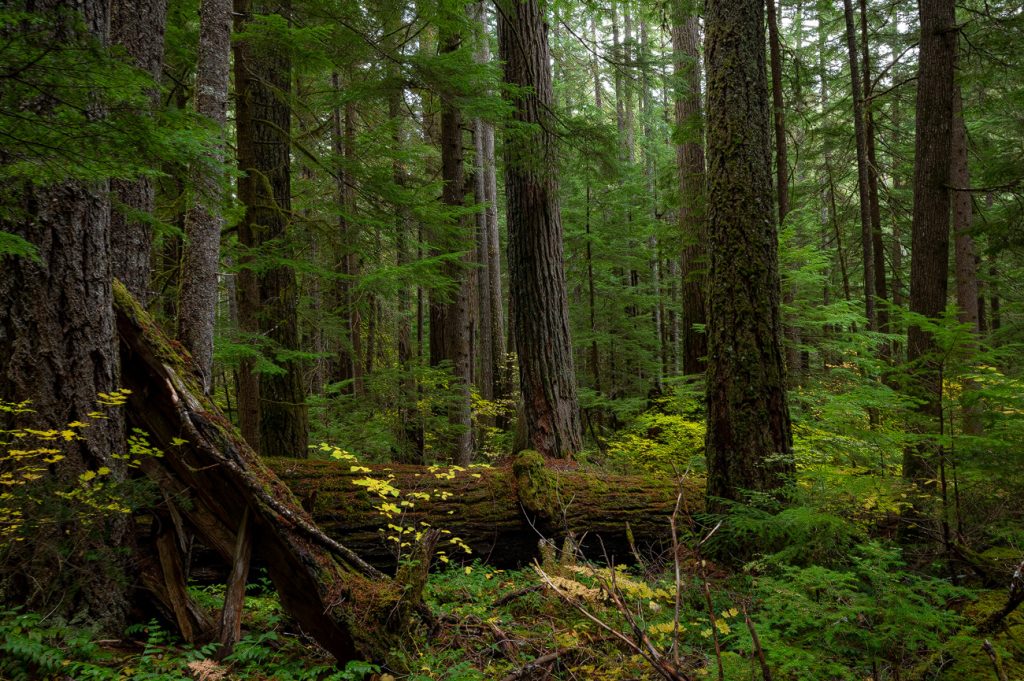
When I first started volunteering as a WildCAT with Cascadia Wildlands, I spent virtually all my free time going out to the Flat Country project, field checking and getting to know fellow forest advocates in the community. This project, and my time spent there, is how I deepened my love and passion for defending the forests of Cascadia. With new friends and old, I wandered through moss-covered Douglas firs and western hemlocks growing more than 200 feet tall and six feet wide. I gazed up in astonishment at cathedral-like western red cedars surrounded by delicate vine maple, and interlaced with Pacific rhododendron flowering magenta in the summer. In autumn, we WildCATs would field check as many units as possible, leave with baskets brimming with chanterelles and head to Bigelow hot springs to soothe sore muscles. The ecosystems in this area inspired me to learn, and knowing it was under threat drove me to fight.
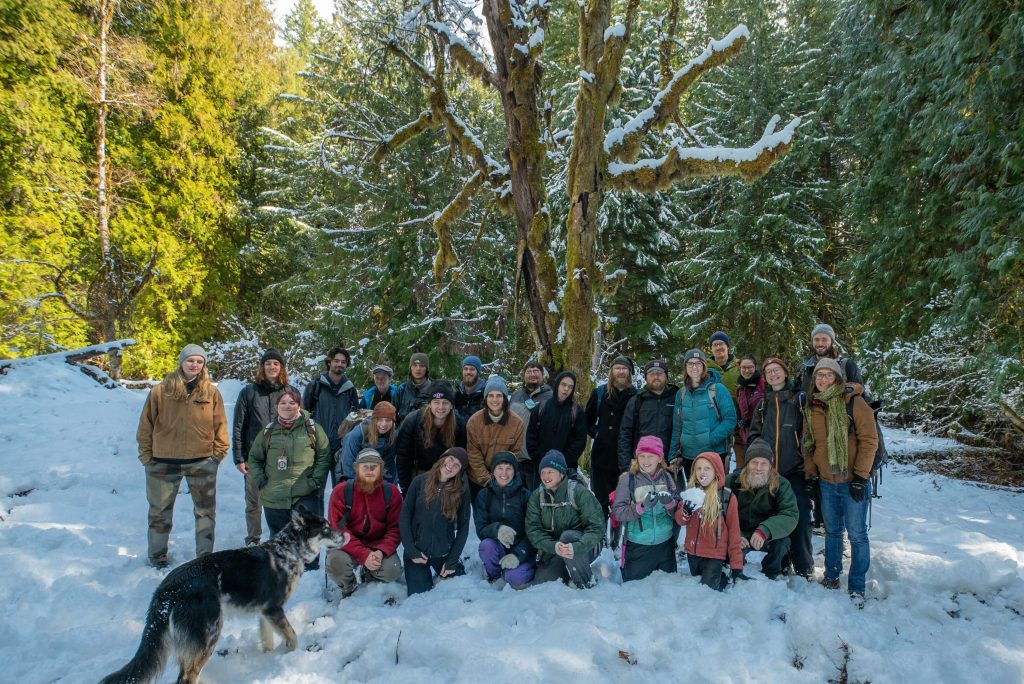
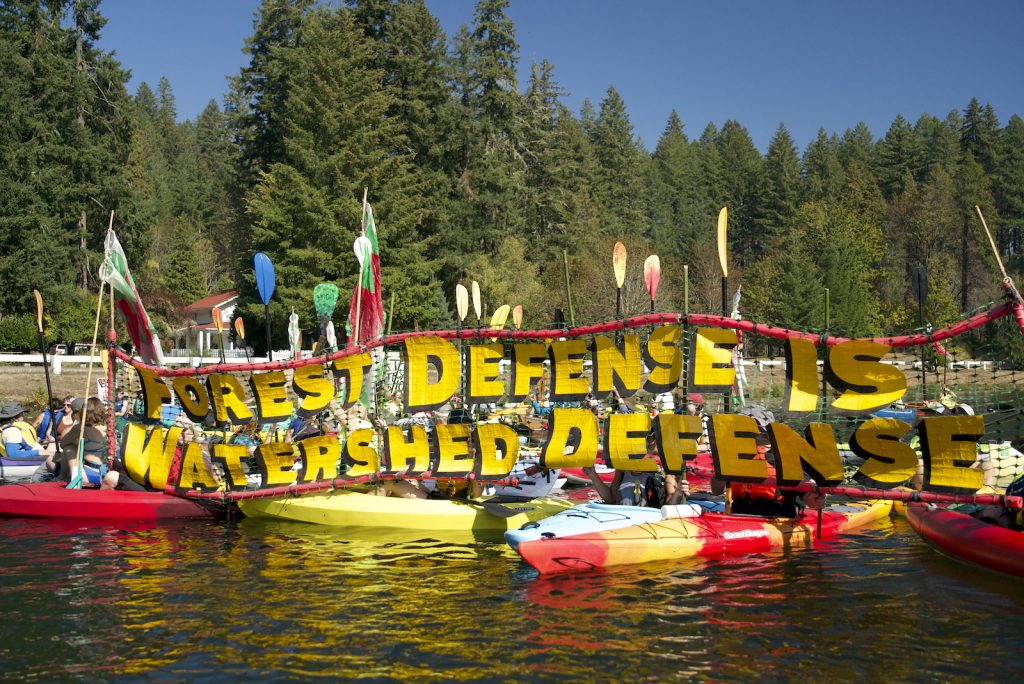
In addition to almost five years of extensive field checking and writing public comments, we wrote opinion articles and letters to the editor, and highlighted the project in the national Worth More Standing report to draw the attention of policy makers. We further grew public awareness through community-centered events like the first ever Flotilla on the McKenzie, and rallying at the Forest Service’s doorstep. The robust Deep Roots Trainings for Forest and Climate Action series, now in its fourth year, kicked off at Flat Country, and unaffiliated community advocates even hung a banner across highway 126 and put up a tree sit. Advocates, community members and rabble rousers put in blood, sweat and tears to protect these ancient forests and the communities that rely on them…and we won! At the end of 2022, the Forest Service announced its decision to withdraw the Flat Country timber sale. Thankfully, my and so many other people’s efforts resulted in the cancellation of this terrible project, keeping these irreplaceable forests standing. However, when it withdrew Flat Country, the Forest Service stated it planned to revisit the project. For the past three years we’ve been watching.
Under the Trump administration, we are facing unprecedented attacks on public lands. The administration has demanded public land agencies increase the cut from national forests and Bureau of Land Management (BLM) managed public lands, with hardly any environmental review and reduced public involvement opportunities. This means we are likely to see horrendous projects like Flat Country popping up across the nation. We must remain resilient, keep a keen eye on projects, and be even more nimble with our field checking and organizing. When the Forest Service’s McKenzie District announced two projects around the same area as Flat Country in 2025, major alarm bells went off. The two projects are called the South Fork Delta Expansion and the Tie Project, and both have direct overlap with previous Flat Country units. With the help of our friends at Oregon Wild and WildCAT volunteers, we’ve taken a close look at these two proposals. The bottom line is that thankfully, they are not targeting the highly important mature and old- growth stands in Flat Country we were initially concerned about. However, the projects still do have some concerning aspects. Let’s break them down:
Tie Project
On Nov. 21st, 2025, in collaboration with the Oregon Department of Forestry using the Good Neighbor Authority (GNA), the McKenzie District of the Willamette National Forest announced it was beginning scoping the Tie Project. According to the initial scoping notice, the Forest Service plans to “treat” i.e., log, 7,898 acres. The stated purpose and need for the project is:
- Providing a sustainable timber supply to support local economies,
- Reducing wildfire risk through strategic thinning and shaded fuel breaks,
- Improving forest health and resilience by enhancing forest structure, species diversity, and stand density, and
- Maintaining and improving road systems for management, recreation, and wildfire response.
When I opened the map for the Tie project to see where it is located, my heart sank. I could immediately tell that the units are in the same area, and spreading across similar boundaries, as Flat Country. Were we really about to fight this old-growth logging project again and so soon? Before panicking, I needed to take a closer look. And as it turns out, the project is not as bad as it seems, at least in terms of targeting mature and old-growth. While the project is quite massive, with 7,898 acres of logging proposed, it appears that the majority of the project consists of previously clearcut plantations that have now grown into dense, relatively young forest stands. An area that legitimately could benefit from thinning. Also, of the 209 units proposed in the project, only 38 of them directly overlap with those from Flat Country. Of course, field verification is almost always necessary to determine how accurate this is. That checking will happen after winter snows melt.
South Fork Delta Expansion
The second project in the Flat Country area is the South Fork Delta Expansion, first proposed in early July 2025 by the McKenzie District in the Willamette National Forest. This project is meant to “provide recreational opportunities near the Delta Campground area” which burned in the 2020 Holiday Farm fire, and also expand the restoration area in the 2018 Lower South Fork McKenzie River Floodplain Enhancement Project. Restoration and floodplain enhancement is absolutely a great use of agency and taxpayer resources, and oftentimes these projects need to use larger diameter trees and their rootwads to meet the goals of the restoration. Unfortunately, the fact that the agency wants to source trees directly from Flat Country, which is over 20 miles away from the restoration area when those efforts usually use trees from much closer, raised some flags, especially because the project boundaries are identical to some of the older units in Flat Country.
| Flat Country Unit in South Fork Delta Expansion EA | Age Class of Unit (data provided by USFS, 2018) |
| Unit 1900 | 141 years old |
| Unit 1910 | 126 years old |
| Unit 1920 | 148 years old |
| Unit 1940 | 125 years old |
| Unit 1950 | 108 years old |
| Unit 1980 – this area is where the first Deep Roots Forest/Climate Action Camp was held in 2022 | 150 years old |
| Unit 2030 | 102 years old |
| Unit 2020 | 98 years old |
| Unit 2010 | 132 years old |
| Unit 2200 | 147 years old |
The over 300 acres of old-growth forest where logging would occur is far more valuable as an intact ecosystem. The forest is currently providing habitat value not only to those species who are living there, but also to the salmon, bull trout and other aquatic life living downstream in the floodplains. These increasingly rare forests help mitigate runoff during extreme weather events, filter sediment, and ensure steady stream flows. Why degrade this habitat in order to restore habitat elsewhere? Why sacrifice old-growth forests in the uplands to restore floodplains and lowlands? The Forest Service did not disclose if these units are part of another timber sale that got cancelled and they failed to address the potential impacts to imperiled species utilizing the habitat, most notably the northern spotted owl. The Forest Service canceled the Flat Country project in the face of overwhelming public opposition. Why bring that controversial mess into this otherwise appealing project?
Cascadia Wildlands and our partners at Oregon Wild brought these concerns and others to the Forest Service directly in an effort to identify a better way to move forward with restoring important floodplain habitat while minimizing impacts to older forests and protecting habitat for northern spotted owls in the Flat Country area. We are still in negotiations and are hopeful we can get to a place where we can support this project.
Overall, I feel better about the South Fork Delta Expansion knowing that it will improve floodplain conditions and have minimal impacts to the mature and old-growth forests in the Flat Country area. And for the Tie project, knowing that the essential and incredibly valuable forests are not a part of it is definitely a better outcome. Both of these projects are a stark reminder of how important it is for us to maintain a close watch over proposed projects, and the value of on the ground field checking. Want to get involved? Check out our Field Checking 101 video, and sign up for WildCAT (Cascadia Action Team), and reach out if you have any questions about these or other projects.