By: Jack Dodson, Summer Field and Events Coordinator
At the end of June, Cascadia Wildlands hosted our largest WildCAT (Cascadia Action Team) event of the year: Field Checking Basecamp. Over the course of five days, from June 18-22, around 50 volunteers field checked units in the contentious 42 Divide timber sale near Camas Valley in Oregon’s Coast Range. In this project, the Bureau of Land Management (BLM) proposes to aggressively log 7,000 acres of diverse forest stands, even though more than half the land is in reserves set aside for wildlife habitat conservation. The area targeted for logging is located within the “checkerboard” of public and private lands in Douglas County, already heavily impacted by private industrial clearcuts. The timber sale is located within the homelands of the Cow Creek Band of Umpqua Tribe of Indians, one of nine federally recognized Tribes in Oregon. The Tribe and their ancestors have lived in and traveled throughout the Umpqua River Basin since time immemorial.
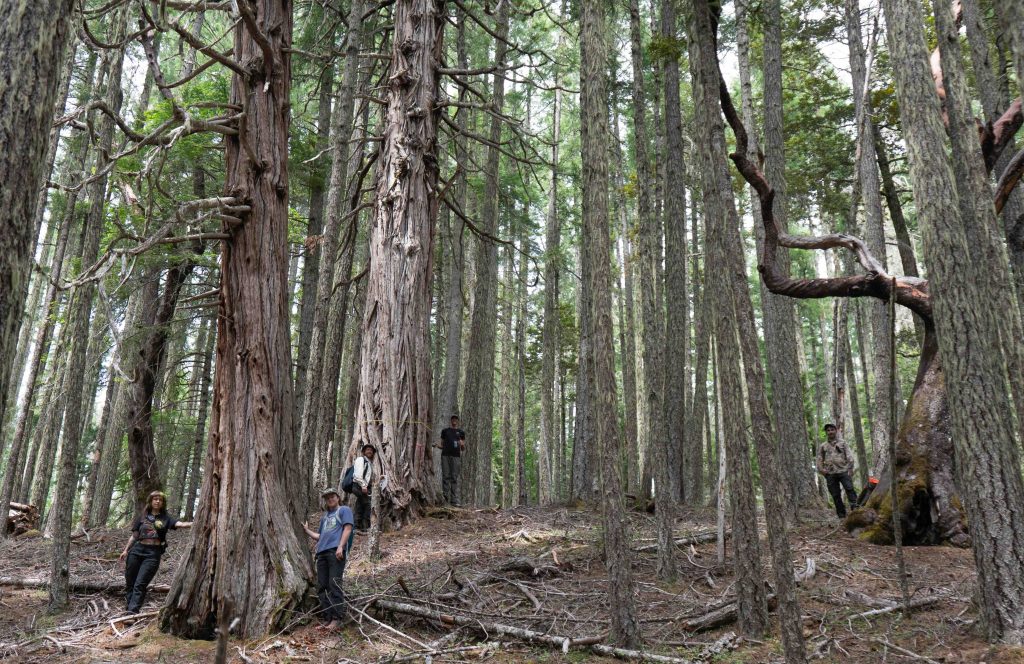
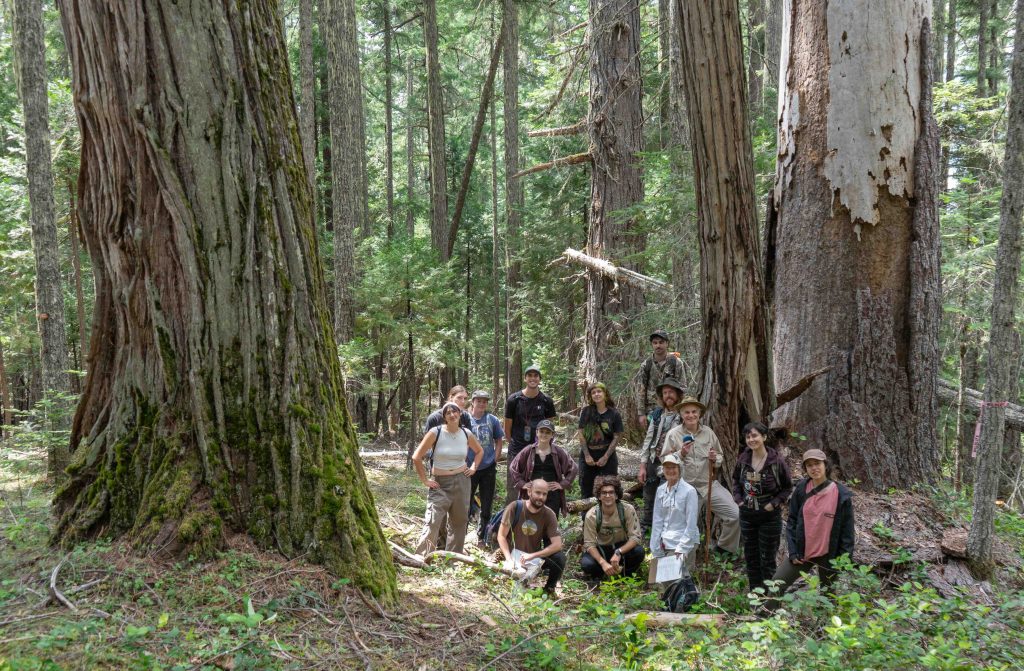
After a hot Thursday afternoon setting camp, WildCATs spent the evening hanging out and getting to know each other as we anticipated the days to come. When Friday morning came, we settled into what would be the daily flow for the remainder of Basecamp. Each morning, we collectively made breakfast (with delicious vegetables graciously donated by local farms), before splitting into field-checking groups of 5-10 people and exploring units of the 42 Divide timber sale. Field checking is the process of documenting the on-the-ground conditions of a forest, such as old-growth trees, unmarked streams and waterways, and rare plant and animal species, to challenge, modify, or stop harmful logging projects.
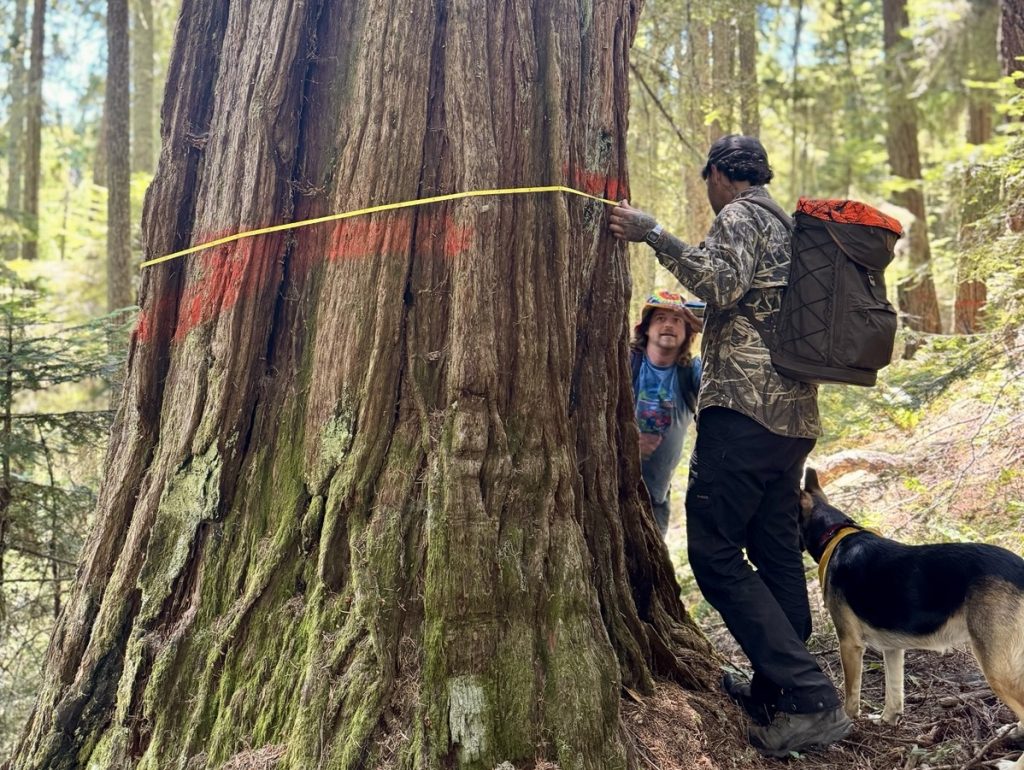
While field checking, we look for, measure, and document forest conditions, keeping our eyes peeled for important habitat features, including old-growth trees, downed logs and woody debris, snags (standing dead trees) with broken-off tops used for nesting, and large upper branches essential for species like the federally threatened marbled murrelet and northern spotted owl. Using survey sheets to guide us, we keep track of the numerous plant and fungi species we encounter, and take note of environmental conditions including slope, aspect, soil, fire history, and other evidence of disturbance.

This year, to help new and returning WildCATs bolster their skills, we launched the WildCAT Learning Ladder: as beginners, people are “housecats,” then, as they develop more skills, they move up the ladder becoming “bobcats,” then “Canada lynx,” and finally “cougars” where they are equipped with the expertise to successfully lead others in field checking.
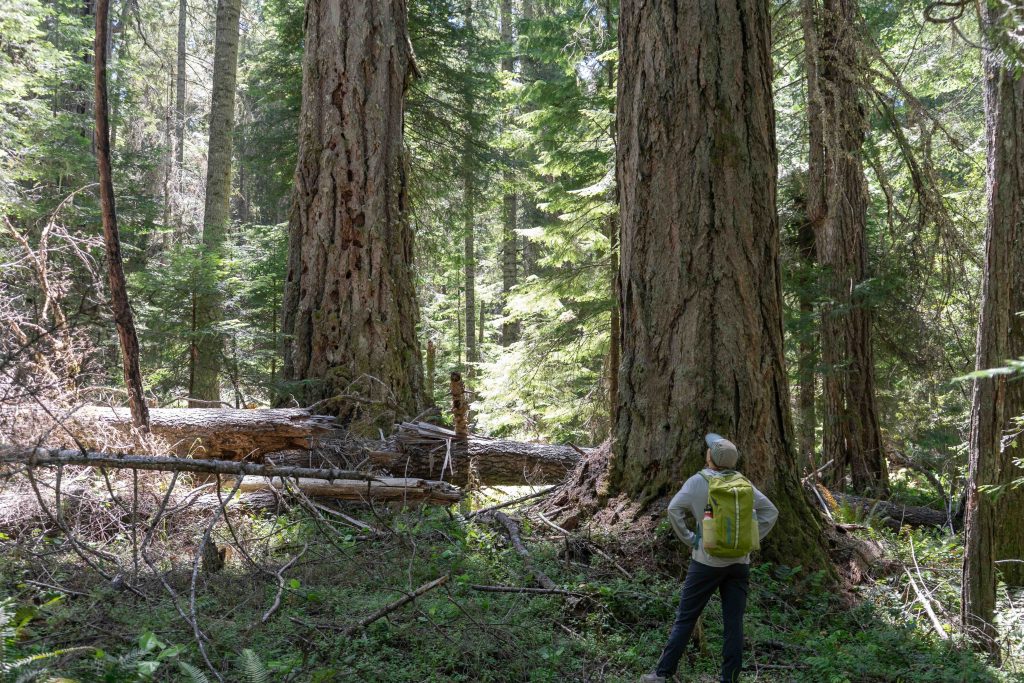
Throughout Basecamp, folks of all levels explored the incredibly diverse and increasingly rare mature and old-growth forests found in the 42 Divide timber sale. We saw massive Douglas fir trees (including one that was seven and half feet wide), zig-zagging branches of old madrones reaching for the sunlight, clouds of spores released by puffball mushrooms, a garter snake resting on a log, and groves of oaks and boulders tucked away on a hillside. At times, we had to navigate patches of poison oak, but it was worth it to see these magnificent forests.
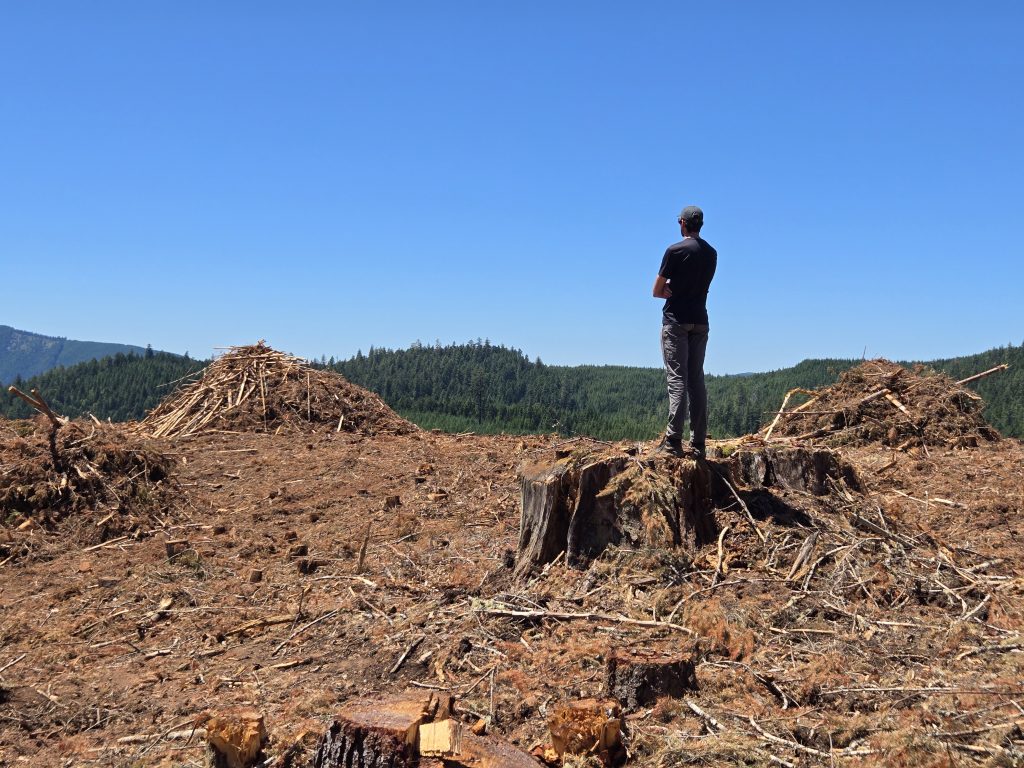
Unfortunately, it wasn’t all unimpaired old-growth forest we saw. It was saddening to see the massive trees cut down to build new logging roads through these timber sale units, the horrific clearcuts on adjacent private lands, and the trees slated to remain standing bearing bright orange spray paint from the Bureau of Land Management timber marking crew. However, it was inspiring to know that our observations of these incredible forests would help protect them.
After field checking from around 11 am – 4 pm each day, we made it a habit to stop by the local reservoir for a refreshing swim and before heading back to Basecamp to start making dinner. Those not on the dinner crew got to hang out (or play frisbee) in the gorgeous meadow below Callahan Ridge. Our delicious meals included curry with rice and tempeh, and a big barbecue spread, and the conversations flowed freely over dinner.
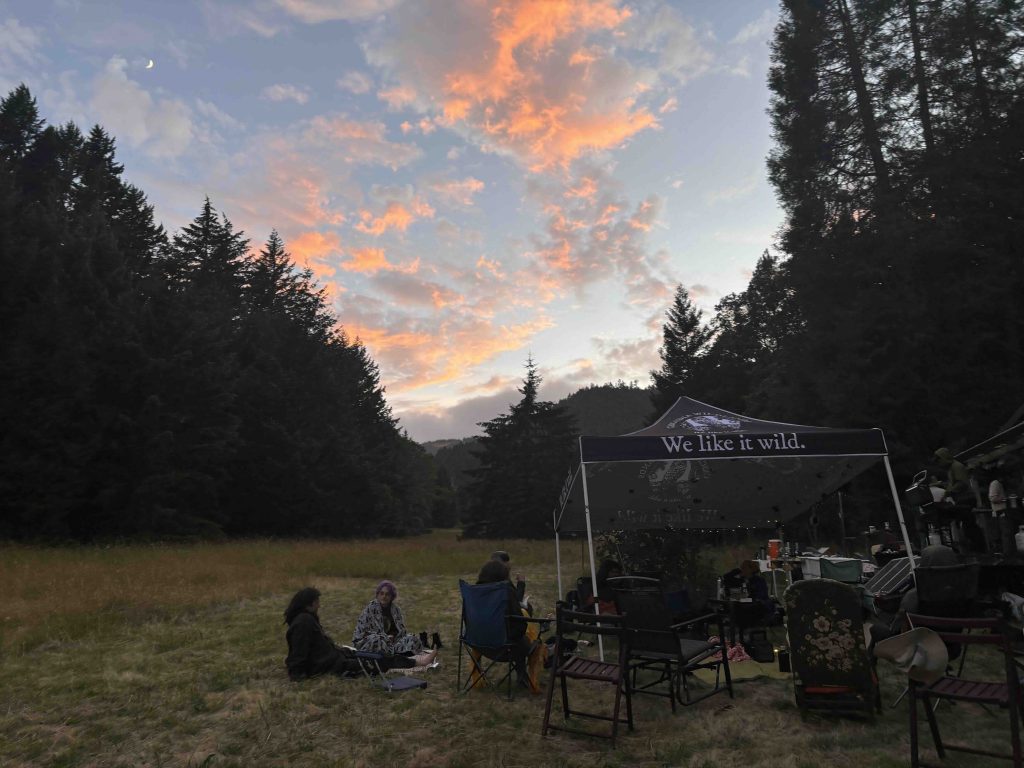
While our days generally followed that schedule, each day had its own unique activities. On Friday, one volunteer led us on an early-morning bird walk to identify the songbirds around camp. On Sunday night, we set up a projector under the starry sky and watched a documentary that one of our hosts made about the 2005 women’s protests against post-fire salvage logging in the Siskiyou National Forest.
Thanks to the tireless efforts of the many WildCAT volunteers who helped with planning food, activities, field checking, transporting supplies, setting up, breaking down, and more. This year’s Field Checking Basecamp was a resounding success. We field checked multiple units, connected with one another and bonded over our shared passions to defend and restore the vital ecosystems of Cascadia. A special shoutout to Mazamas for their generous grant to support this year’s event and to Groundwork Organics, Earthvox Farm, M & A Farms Molalla, Horai Bakery, Wild Child Farm, Horton Road Organics, Fairytale Farms, Hummingbird Wholesale, and La Mouette Bakery for their donations to the kitchen.
To get involved in WildCAT, visit our website for more information.
Update: Represented by our in-house legal team and lawyers with the Crag Law Center, Cascadia Wildlands, Oregon Wild and Crag Law Center were in District Court in Eugene on June 30 to argue our motion for a Preliminary Injunction against the 42 Divide timber sale. We expect a decision in the coming weeks.