FEDERAL ATTACKS ON PUBLIC LANDS
This year has brought some of the worst attacks on public forests that we’ve seen in decades. Bedrock environmental laws like the National Environmental Policy Act (NEPA) and the Endangered Species Act (ESA) are being gutted. The foundational Roadless Rule is being rescinded, and the Trump administration has demanded a 25% increase in logging across public lands already stressed by more than a century of mismanagement. We’re fighting back. Forests Over Fascists!
This timeline is focused on Trump Administration attacks on public lands, including those with nationwide implications and those specifically implicating forests in the Cascadia bioregion. This is far from a comprehensive timeline of all fascist attacks on public agencies. For additional information on a variety of 2025 attacks including those on national parks visit NPCA
ATTACKS ON PUBLIC LANDS: Expanded
Of note, many of the action alerts linked here are no longer live because comment deadlines have passed. We include the link so that visitors can review our concerns about the latest attacks in more detail. Some of the actions are steps in the federal process to, for example, rescind a rule. Several of the processes will have an additional opportunity for comment in the future before they are finalized.
2026
February
January

2025
December

December 6
- The Trump Administration cancels free admission to National Parks on MLK Day and Juneteenth, while adding President Trump’s birthday. Rep. Ritchie Torres of New York swiftly introduced legislation to guarantee free admission to National Parks on all national holidays, including Juneteenth and MLK Day. The bill would block presidents from altering the free-admission calendar at national parks without congressional approval.
December 9
- It was revealed that between late October and early December, the Environmental Protection Agency (EPA) deleted all references to climate change and its causes from the agency’s webpages. Other agencies are following suit.
November

November 19
- The Trump Administration proposes four regulatory changes aimed at gutting implementation of the Endangered Species Act (ESA). The four proposals include reducing protections for species listed as “threatened” under the ESA; making it harder to list species and their critical habitat by removing the prohibition on considering economics in listing decisions, reducing interagency cooperation in conserving imperiled species; and, opening loopholes that undermine recovery efforts for listed species.
October
October 1
- The federal government shuts down. Nearly 30,000 public lands agency employees are furloughed, eliminating the agency’s capacity to carry out restoration and wildfire prevention work like prescribed burns, conduct imperiled species surveys, or respond to public inquiries. Employees who organize and process timber sales continue working, however, as the Trump admin deems logging public lands an essential service and continues to prioritize unchecked exploitation of public lands.
September
September 10
- Department of Interior proposes to scrap the Bureau of Land Management’s Conservation and Landscape Health Rule, commonly called the Public Lands Rule. This rule, finalized in 2024 by the Biden administration, put conservation on equal footing with other uses the agency must consider, including logging, mining, and grazing. Cascadia Wildlands weighs in on why the vital public lands rule needs to be maintained and fully implemented.
September 22
- Forest Service receives over 600,000 comments opposing the Trump administration’s plans to rescind the Roadless Area Conservation Rule, which currently protects nearly two million acres of Oregon’s public forests and nearly 60 million acres nationwide. An overwhelming 99% of comments voiced opposition to rescinding the rule in an extremely brief three-week comment period. In a flight sponsored by the Ecoflight, Cascadia Wildlands and partners at Firefighters United for Safety, Ethics and Ecology (FUSEE) fly over threatened roadless areas with reporters, and congressional staff from Senator Merkley and Representative Hoyle’s office. Sponsored by Oregon’s Rep. Salinas, the Roadless Area Conservation Act (RACA) is critical legislation that would permanently safeguard roadless wildlands. So far, every Oregon Democrat including both Senators are co-sponsoring the Roadless Area Conservation Act, except one: Representative Val Hoyle from Oregon’s 4th Congressional District. Act Now to urge Rep. Hoyle to co-sponsor RACA.
September 29
- The Department of Interior announces a plan to open 13.1 million acres of public land to coal mining leases, at discounted rates, as part of a broader strategy to boost coal production.
August
August 27
- Federal border control agents arrest two Oregon residents working on an active fire in Washington. Agents with the Bureau of Land Management, Forest Service, and Customs and Border Protection agencies took part in the immigration enforcement operation at an active firefighting site. The feds detained both firefighters for over a month, ultimately deporting one firefighter to Mexico.
July
July 3
- Department of Agriculture finalizes a rule drastically changing regulations that implement the National Environmental Policy Act (NEPA), minimizing public input on proposed federal land management projects. These changes immediately impact all 193 million acres of land that the Forest Service manages, including Mt. Hood, Willamette, Umpqua, Siuslaw, and Rogue River-Siskiyou National Forests. Cascadia Wildlands calls on the agency to keep the public involved in public land management.
- Department of Interior publishes a rule removing most of its regulations implementing NEPA and shifting to procedures that significantly limit public involvement and accelerate approval of agency land management actions. This impacts how over 15 million acres of public lands will be managed by the Bureau of Land Management in Oregon.
July 4
- Trump signs H.R. 1, the “One Big Beautiful Bill Act.” into law. Due to massive organizing efforts across the board, the public lands sell off components were eliminated from the bill, but many other public lands attacks remain including expanded fossil fuel development, requirements to increase logging, NEPA rollbacks, and many cuts to conservation and recreation by rescinding funding from the Inflation Reduction Act. The bill requires an increase of 250 million board feet of timber every year on public land managed by the Forest Service.
July 24
- Department of Agriculture Secretary Brooke Rollins releases plans to restructure the Forest Service, including closing all nine regional offices and moving operations to a consolidated office in Colorado. Many research stations, including the 100-year Pacific Northwest Research Station in Portland, will close. Cascadia Wildlands speaks out against the Trump admin’s efforts to demolish the Forest Service and public lands management.
July 29
- Environmental Protection Agency (EPA) proposes rescinding the 2009 Greenhouse Gas Endangerment Finding and vehicle standards. The endangerment finding is the legal foundation for federal climate regulation.
June
June 12
- The Department of Interior continues erasing history by ordering National Parks to post signs asking visitors to report “any signs or other information that are negative about either past or living Americans.”
June 23
- The Department of Agriculture announces its intention to rescind the 2001 Roadless Rule that protects 45-million acres of remaining roadless areas in the US from road building and logging. The bedrock conservation policy protects nearly two million acres of Oregon’s public forests from destructive extractive practices. Cascadia Wildlands urges the administration to drop this reckless proposal.
May
May 2
- Trump releases the proposed 2026 Fiscal Year “Skinny Budget.” It proposes major cuts to public land agency operations, including a $1.3 billion cut to Forest Service operations, $198 million cut for Bureau of Land Management conservation programs, and $911 million cut for Tribal programs upholding the federal government’s trust and treaty obligations to Tribal nations. The proposal eliminates 2,000 National Forest staff positions and guts research and associated staff working on wildfire risk reduction, while proposing the creation of a new Federal Wildland Fire Service at the Department of the Interior to house firefighting operations.
May 20
- Trump’s budget reconciliation bill, dubbed the “One Big Beautiful Bill Act,” is introduced. A provision in the bill would authorize the sale of millions of acres of public lands across 11 Western states, including 21 million acres in Oregon, and increase timber output targets to ramp up logging on federally managed public lands. Cascadia Wildlands pushes back on this brazen attack on public lands, together with public lands advocates across the country.
April
April 4
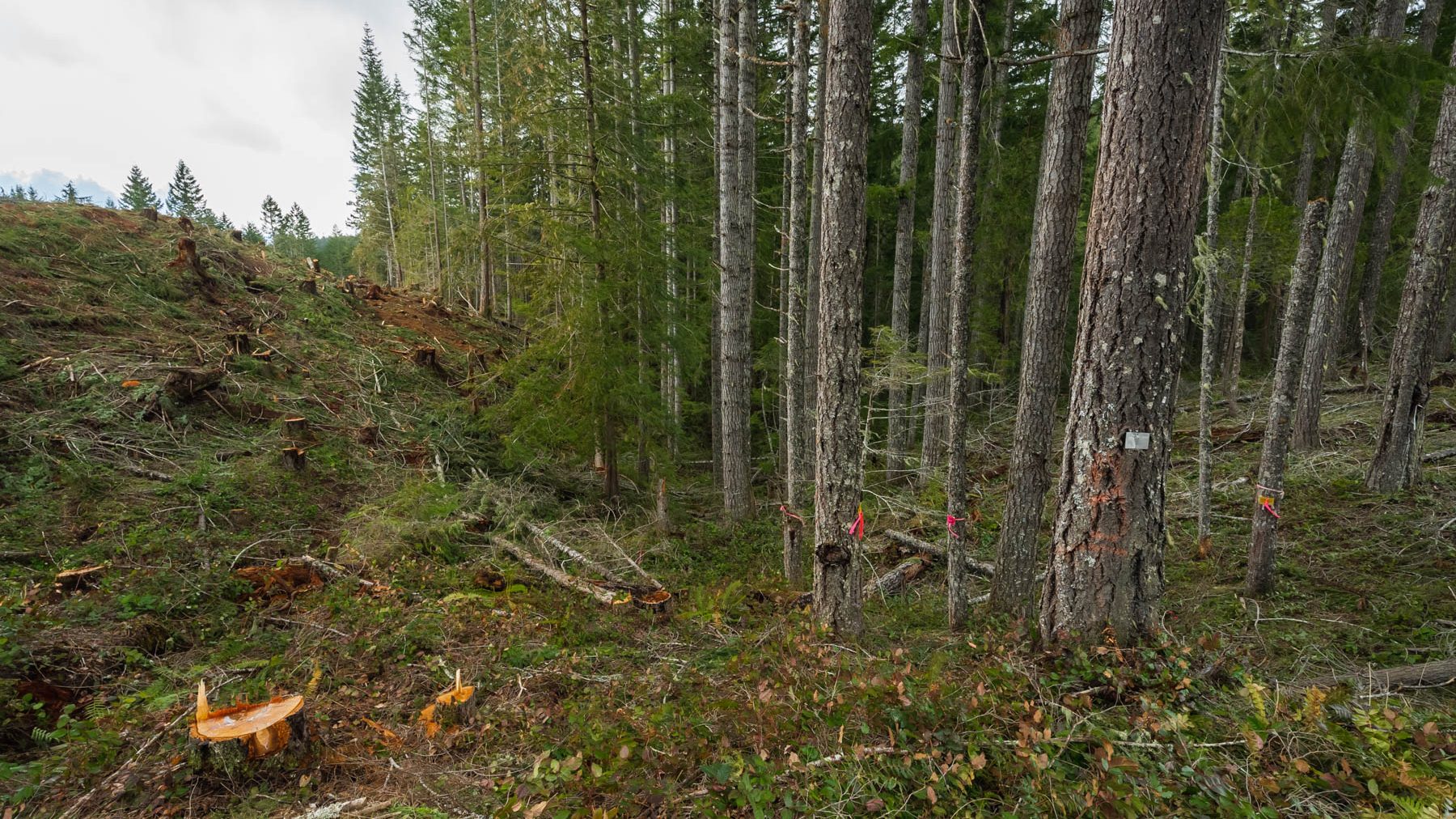
- Forest Services moves to implement Trump’s big timber Executive Order. Department of Agriculture Secretary Brooke Rollins and Acting Associate Chief Chris French issue a memo explaining how the Forest Service will meet increased timber output targets over the next four to five years by using emergency powers, bypassing regulatory requirements that require the agency to consider impacts to species and the environment, and conducting aggressive post-fire salvage logging. The agency will effectively shut the public out of land management decision-making processes by limiting public engagement opportunities or using planning methods that bypass public review altogether.
April 10
- The so-called “Fix” Our Forest Act (S.B. 1462) is introduced in the Senate by Senators Hickenlooper, Padilla, Curtis, and Sheehy, gaining momentum for this ironically titled bill. There’s no “fixing” a forest with logging. In fact, the bill makes it easier to bypass environmental review and aims to keep the public voice out of decision making. It lets agencies use massive “Categorical Exclusions” to approve logging projects, allowing 10,000 acres or 15 square miles projects to be fast-tracked with very little environmental analysis or public oversight.
April 11
- The administration proposes rescinding the definition of “harm” under the Endangered Species Act. This change would essentially gut the ESA, limiting protections to actions that directly harm or kill the animal, while excluding habitat damage that would threaten the species’ ability to feed, breed, or find shelter.
- Presidential memorandum aggressively slashes agency regulations, including the Administrative Procedure Act (APA), based on recent Supreme Court rulings. The memo directs agencies to repeal what regulations they deem to be unlawful, while bypassing the notice-and-comment process. Without comprehensive public input from government actions, massive environmental impacts including fast-tracking logging projects, could increase.
March
March 1
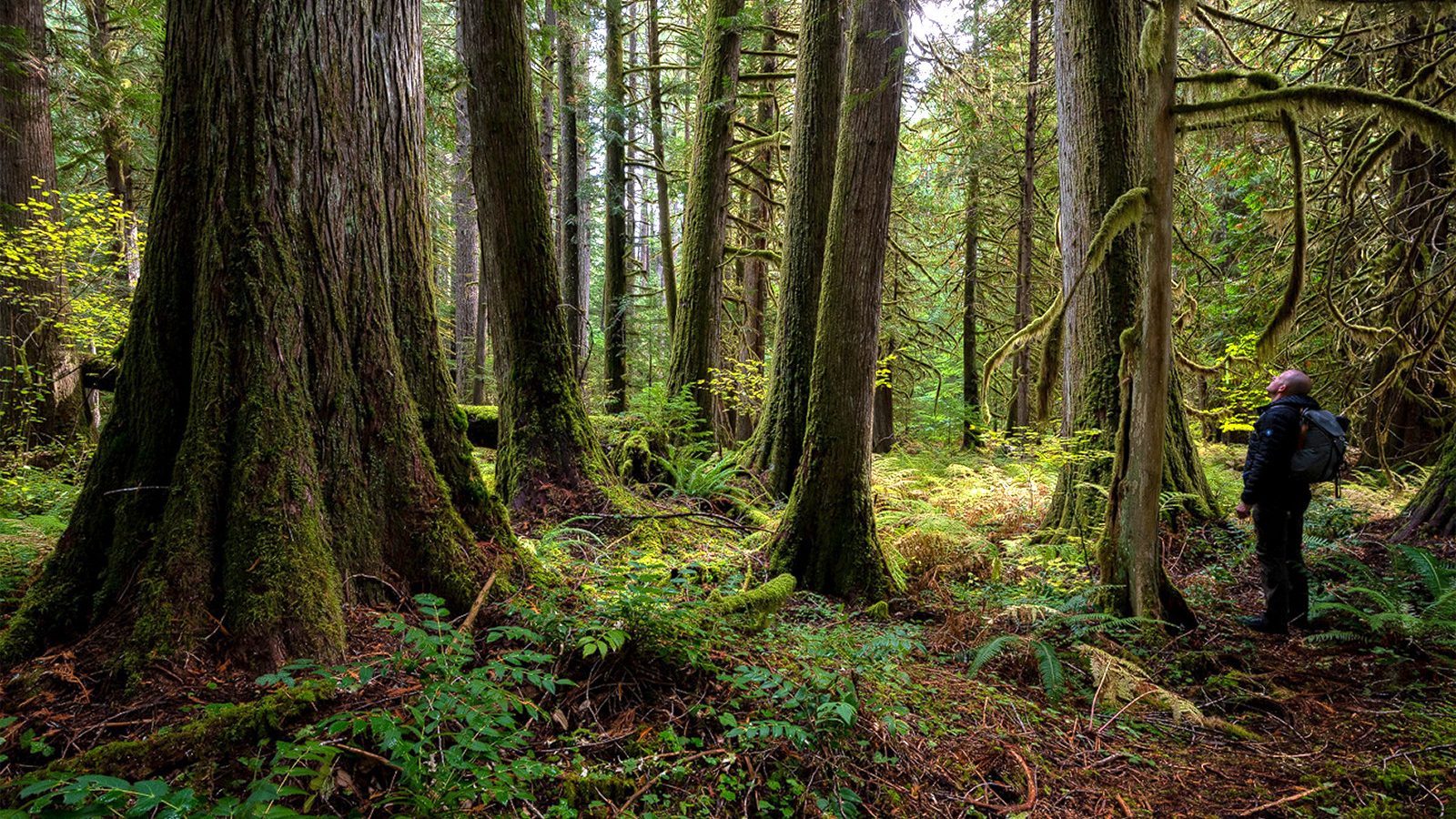
- The Trump admin issues “Immediate Expansion of American Timber Production” Executive Order 14225, which directs agencies to ramp up the cut across the country by 25% under the guise of wildfire protection and national economic security. The order directs agencies to sidestep environmental precautions in favor of expediting extractive logging, which would spell disaster for public forests, water, wildlife, and climate stability. This order was accompanied by Executive Order 14223. Cascadia Wildlands responds to Trump’s big timber executive order.
March 12
- The Environmental Protection Agency announces the largest deregulation effort in U.S. history, rolling back clean air protections, loosening fossil fuel pollution standards and more. These actions will have dire impacts to public lands including opening ecologically important areas to development.
March 27
- Department of Interior Re-Writes History. Executive Order 14253 directs the Department of Interior to begin reviewing historic documents, memorials, and similar properties for “partisan ideology.” Ultimately promoting a white washed retelling of American history and historical events by removing information that “disparages Americans” and instead promotes “greatness and progress,” erasing accurate history.
February
February 4
- Environmental Protection Agency (EPA) Announces Plans for Deregulation and AI Dominance. EPA Administrator Lee Zeldin releases plans for “Powering the Great American Comeback” initiative, which focuses in part on restoring boosting fossil fuel production and making the United States the “artificial intelligence capital of the world.” AI data centers drastically impact ecosystems and contribute to climate change – some estimates conclude the centers consume as much water as 10 million Americans and emit as much carbon dioxide as 10 million cars.
February 14
- Massive Loss of Public Lands Employees Begins. Department of Government Efficiency (DOGE) lays off 3,400 Forest Service and 1,000 National Park Service employees following EO 14210, where federal agencies are ordered to submit reorganization plans to begin large-scale firings through a Reduction in Force (RIF) effort. Employees who were not fired are offered a buy out option. By March, the Forest Service and National Park Service would see a 25% and 13% loss of employees respectively.
February 25
- Council on Environmental Quality’s (CEQ) rescinds NEPA regulations, which provide guidance on implementing the bedrock statute. These changes significantly limit public involvement and expedite project review timelines, undermining the ability of communities to influence public land management decisions and paving the way for unchecked extraction and habitat degradation.
January
January 16
- Fix Our Forests Act (H.R. 471) introduced in the House by Arkansas Representative Bruce Westerman. The bill passed the House on a bi-partisan vote, 279 – 141 (see how House members voted here). The misleadingly-named ‘Fix Our Forest Act’ seeks to greatly increase logging on federally managed public lands, all under the guise of wildfire suppression. Funds for making homes fire-resistant, emergency infrastructure and support, and fire preparedness are essential for helping people stay safe and provide the assistance they need. Unfortunately, this bill funnels money away from such efforts, and instead focuses on counterproductive, ineffective logging in the backcountry.
January 20
- Trump Rescinds (EO 14148) Suite of Executive Orders and memoranda addressing climate change, the environment, public health, Diversity, Equity and Inclusion (DEI) and more.The administration also orders all federal DEI and environmental justice offices, programs, grants, and requirements to be terminated (EO 14151).
- Trump issues first attack on specific bioregion’s public lands EO 14153: Department of Interior ordered to maximize Alaska’s natural resource development and production.
- Trump freezes federal hiring: Tens of thousands of government jobs lost in the 90-day hiring freeze as job offers are rescinded, including the more than 2,500 non-fire temporary employees in the Forest Service who build trails, plant trees, remove invasive species and more.
January 30
- SO 3416: Ending of DEI programs and gender programs, replacing “gender” with “sex” on government forms , and National Park Service begins removing LGBTQ+ history webpages.