
By Bob Ferris
When I was in graduate school we learned an awful lot in our core areas of expertise. But we also spent time talking about scientific ethics and acceptable practices. Part of those discussions dealt with issues relating to research and publications such as why a certain person should be identified as a primary author or how study animals should be treated during the course of a project and after. The ethics and process trainings were not always formalized in a classical sense, but by the end of my graduate school tenures I had been exposed either though instruction or example to a broad spectrum scenarios that I and others assimilated into our own personal scientific ethos.
This grounding has served me well over the years. It has made me speak up when I felt that was required and it has also made me hold my tongue and not speak when I lacked the necessary grounding or experience to comment or serve as a credible voice in a particular debate. And where I have not had the academic credentials to speak—climate science, economics, and energy policy, for examples—I have made damned sure that my comments were directed by accepted peer-reviewed research or were vetted by acknowledged experts in the field prior to my speaking out on the topics. In short, I take time to do my homework and am always very upfront about my credentials and my sources. And I have observed others in similar situations doing the same—this is extremely important if we are to retain our credibility as voices for science.
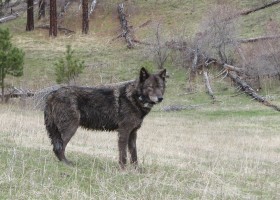
Because of this I am sorely disappointed by those with science backgrounds allowing themselves to be characterized as “experts” in areas where they have little or scant experience. We have certainly seen this in the climate change “debates” and it also seems to be a key component in the wolf discussions. This comes to my mind because I recently read a headline that went: Wolf Expert to Speak Thursday. Doing a little research we find that the “wolf expert” is actually trained in hydrology—an expert on water not wolves.
Mission of the Oregon Cattlemen’s Association’s Wolf Task Force: This committee will work to defend rancher’s rights to protect their livestock from wolf predation and require full compensation to ranchers when wolf predation on livestock does occur.
Now the person in question is certainly not responsible for the above headline, but he is not absolutely faultless in the matter because he has spent a lot of time and energy publicly talking about wolves as part of his role with the Oregon Cattlemen’s Association’s task force on wolves. And he like others who are being trotted out by anti-wolf forces such as Jim Beers or even Val Geist should take some time to think back to their own ethical grounding and back away from what should be considered an exercise in un-informed advocacy leveraged by the false specter of credentials.