By: Noah Angell, Communications Fellow
As I stepped out of the car that recent cold, foggy morning, the first thing I noticed was the silence.
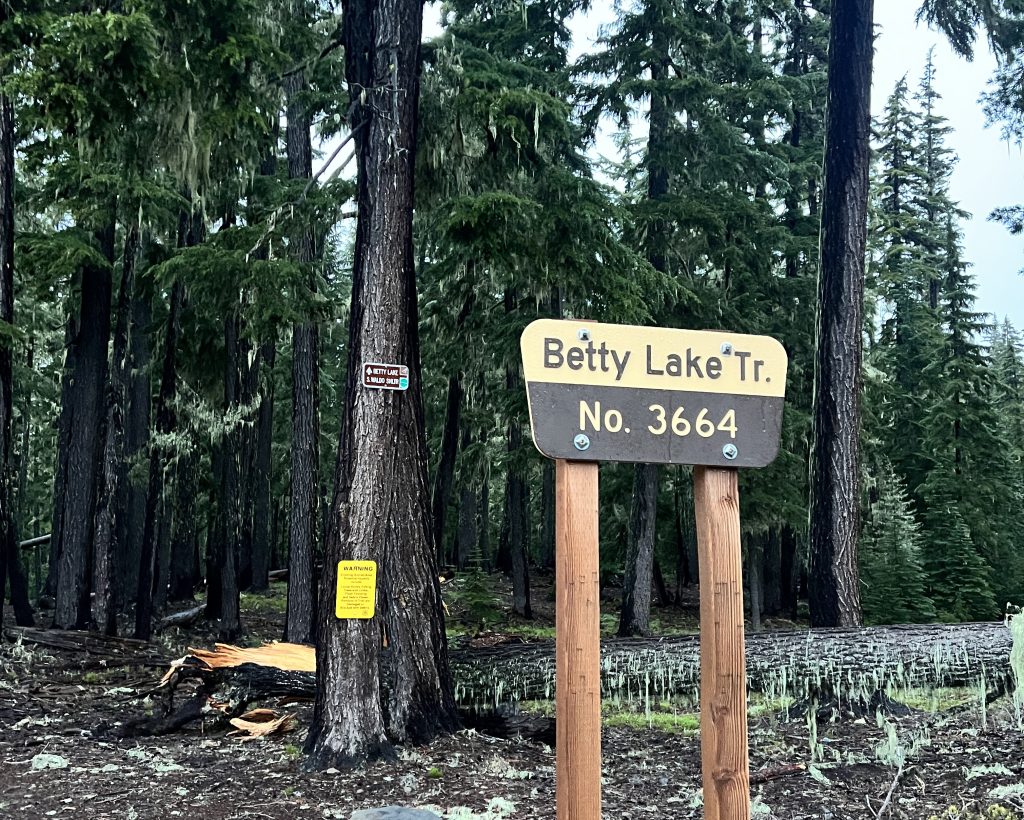
However, not complete silence. As I quietly walked through the forest I noticed it was alive with the calls of varied thrushes, dark-eyed juncos, yellow-rumped warblers, and red-breasted nuthatches. I could hear and feel the steady drops of moisture falling from the trees and see the mist rolling over the surface of Betty Lake. There was no yelling, no music blasting from speakers, no sirens, and no crowds.
That feeling of solitude and remoteness, however, was no accident. I was in the Willamette National Forest, specifically a section protected by the Roadless Area Conservation Rule. This Roadless Area just east of Waldo Lake is part of Oregon’s nearly two-million acres of roadless forestland and part of the 45-million acres nationwide protected from logging, road building, and other destructive extractive practices. These roadless forests provide much-needed wildlife habitat, clean drinking water, opportunities for recreation, and some of the last truly wild and undeveloped places where people can experience real backcountry solitude on public lands.
Before joining Cascadia Wildlands as the communications fellow, even as a passionate public lands user and advocate, I had never heard of the Roadless Rule. Like many people, I only really knew about the protections that came from public lands being designated as National Parks, National Forests, National Monuments, or National Wildlife Refuges — basically all of the more popular and well-known “National” designations. I had no idea that some of our last remaining intact and remote public lands had been protected for decades by a Clinton-era policy specifically designed to keep roads and industrial development out of these areas.
That changed during my first year working with Cascadia Wildlands.
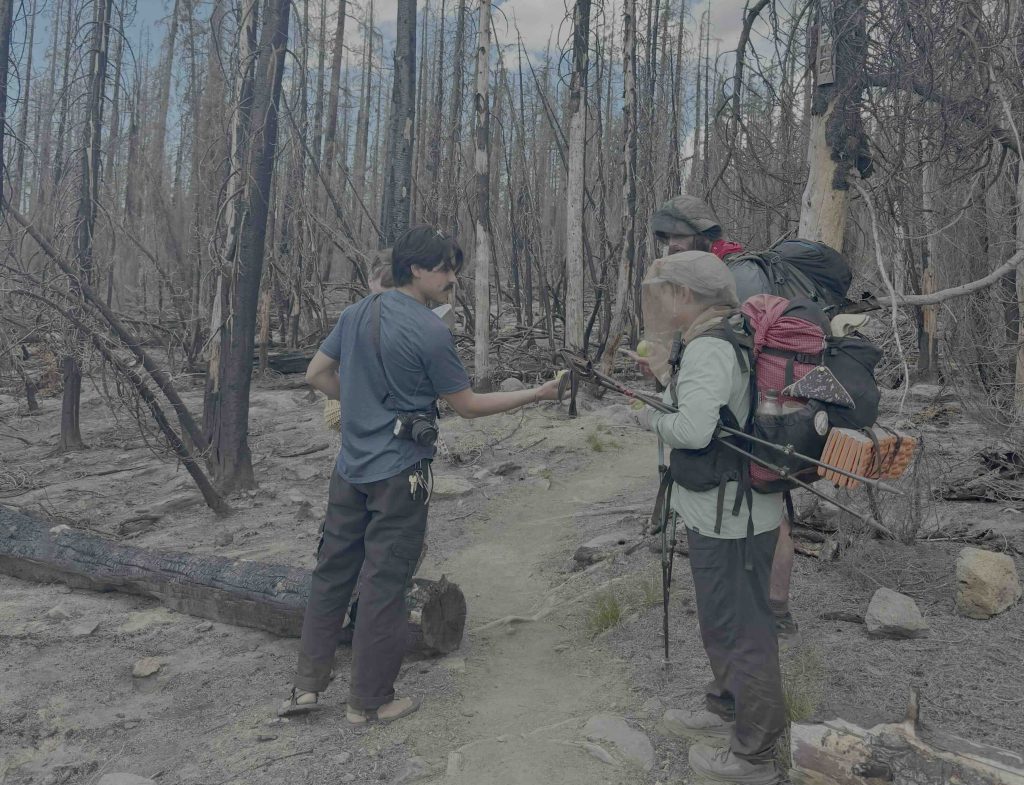
In the summer of 2025 during my first few weeks at Cascadia Wildlands, I visited this same Roadless Area, but a bit to the north near Charlton Lake. The forest was still showing signs of a recent wildfire, and the experience changed how I thought about both fire and roadless forests. While some people see wildfire as purely destructive, I quickly noticed signs of life returning to the burned landscape. Fireweed was blooming along the trail, and woodpeckers were hard at work on the standing dead trees. Both are species that are well adapted to wildfire in the Cascades. Fire has long been a dynamic and necessary part of healthy western forest ecosystems, helping sustain biodiversity, and a key management tool deployed by Indigenous people who have stewarded these lands since time immemorial. Many plants and animals have evolved to coexist and thrive with fire.
I have also learned that Roadless Areas aren’t the wildfire hazard some people claim they are. In fact, research compiled by our friends at the Wilderness Society found that wildfires are four times more likely to start in areas with roads than in roadless forest tracts. This helped me realize just how resilient these ecosystems are and why protecting them is so important, especially as the twin climate and biodiversity loss crises unfold.
A year later, I returned to this Roadless Area east of Waldo Lake to visit Betty Lake, summit The Twins at 7,300’ and capture some photos and videos of the surrounding area. I was also hoping to hike a section of the Pacific Crest Trail that traverses the Roadless Area, given that backcountry trails like the iconic PCT rely on these landscapes remaining free from industrial development.
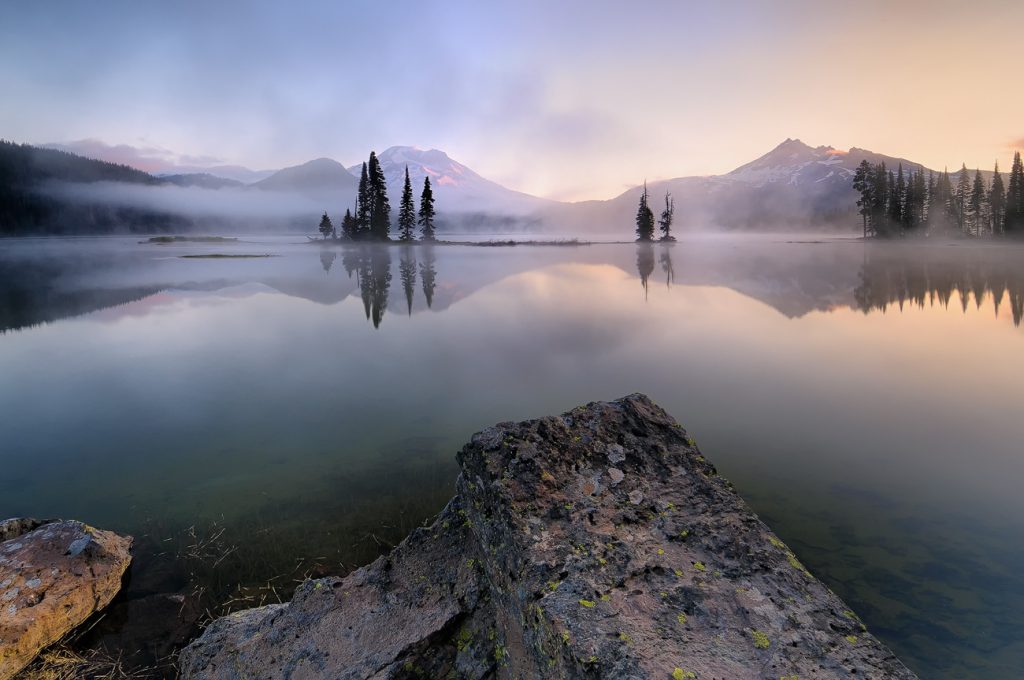
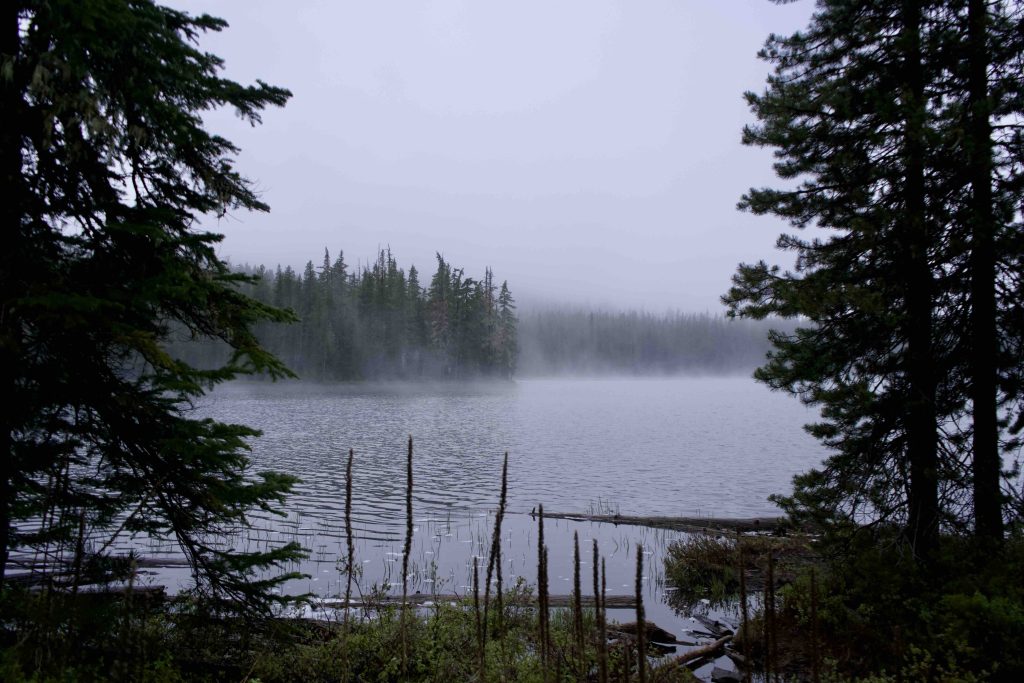
My morning began under a thick layer of mist and low clouds as I stood at Betty Lake at 5,500’ hoping to recreate a sunrise shot by Andrew Kumler, an amazing photographer and Cascadia Wildlands supporter, taken at Sparks Lake on the Deschutes National Forest south of Bend. I was pretty disappointed to find that instead of a clear sky painted with golden pink hues, I was met with gray clouds and a moody, mist-covered lake. Not a complete loss but also not the photo I was hoping to capture.
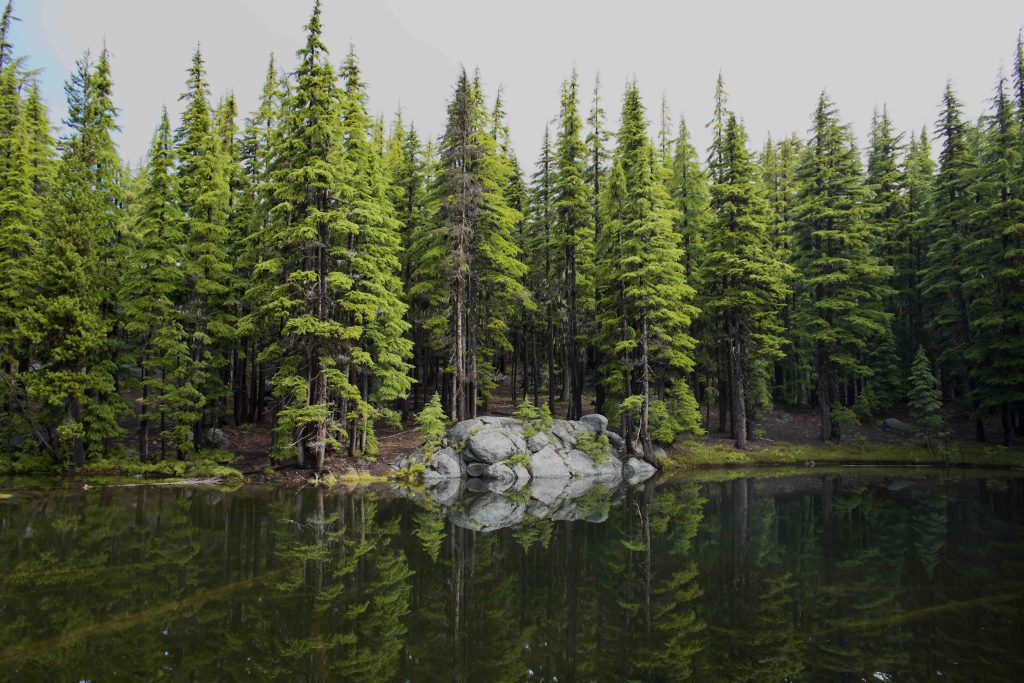
From there, I made my way to the Twin Peaks trailhead, hoping to get a shot from the top overlooking the surrounding Roadless Area. Pine siskins, golden-crowned kinglets, and brown creepers echoed through the trees. Sunbeams eventually broke through the clouds just as I reached a small meltwater lake that seemed to be calling my name as sunlight reflected off its surface. As I hiked farther and higher, the forest seemed to grow older, with large mature trees lining the trail and fallen giants lying across it.
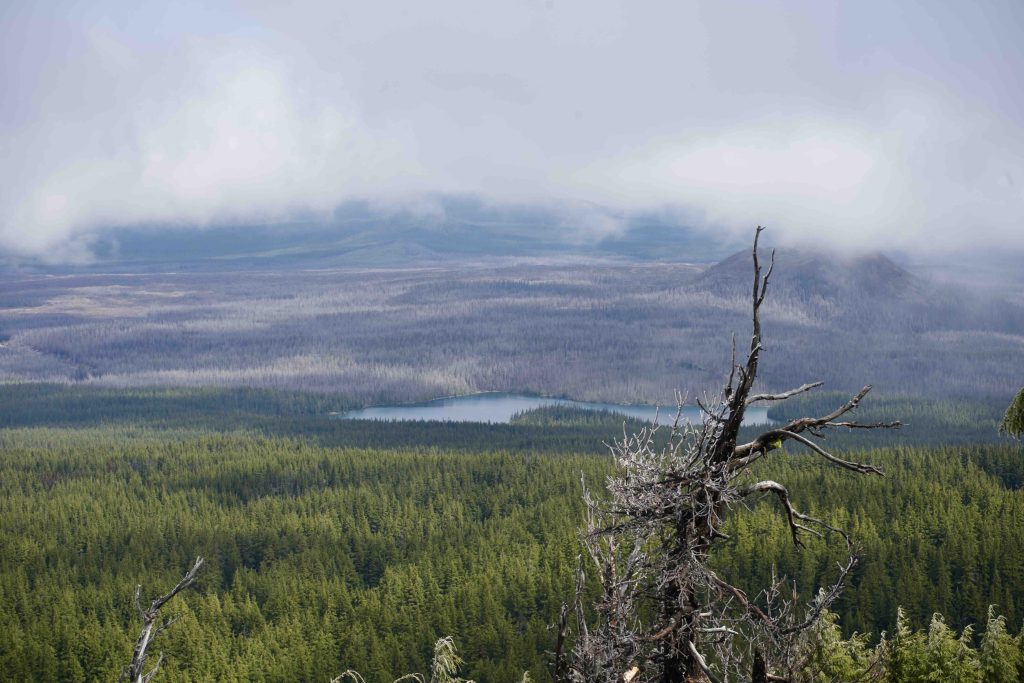
As I climbed the steep, final 400’ to the summit, I caught a brief glimpse of the surrounding roadless landscape just before the clouds rolled back in, and I was once again swallowed up by mist. I realized that the experience wasn’t about the viewpoint or capturing the perfect photograph. It was about being immersed in an area that still felt wild and remote – and realizing it is both a privilege and a choice to continue to protect these areas to ensure future generations can experience the same.
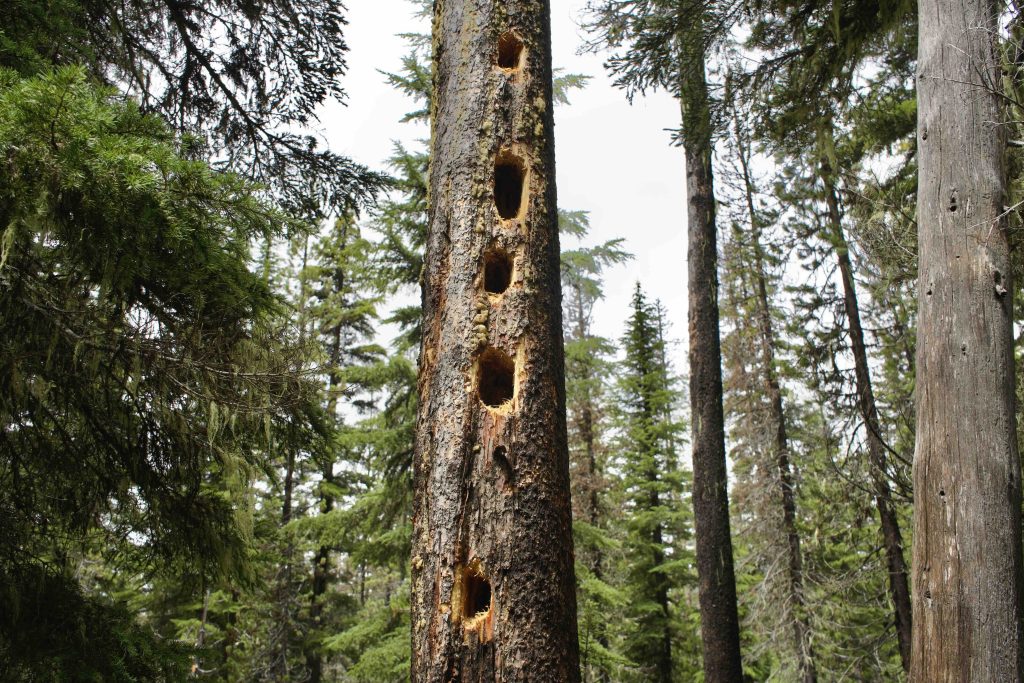
On my hike back down, I heard a rhythmic “thump, thump, thump” echoing through the forest. Using my Merlin app, I was able to identify the culprit as a hairy woodpecker. Moments later, I spotted fresh evidence of its work on a nearby tree, something I had completely missed on the climb up.
Incredibly, I went the entire day without seeing a single person.
That’s what these roadless areas protect. Not just forests, wildlife, and clean water, but solitude. The opportunity to get away from it all and spend time in a place free from roads, noise, and development.
But now, designated Roadless Areas in Oregon and across the country ARE AT RISK!
The Trump administration is working to eliminate the Roadless Area Conservation Rule, commonly referred to as the Roadless Rule. The rule was adopted in 2001 after 600 public hearings were held across the nation, and the public provided more than 1.6-million comments in support – more comments than any other federal rule in the nation’s history at the time.
The Trump administration first announced its intent to eliminate the Roadless Rule on June 2025 and later opened an initial public comment period on the proposal. During that period, advocates submitted more than 600,000 comments, with the overwhelming majority opposing the administration’s plan to rescind the rule.
Now we need to do it again.
The U.S. Forest Service is expected to release a Draft Environmental Impact Statement that outlines and analyzes the environmental impacts of the proposed rollback this summer. This upcoming comment period will give the public another opportunity to speak up for our forests and oppose this attack on roadless protections.
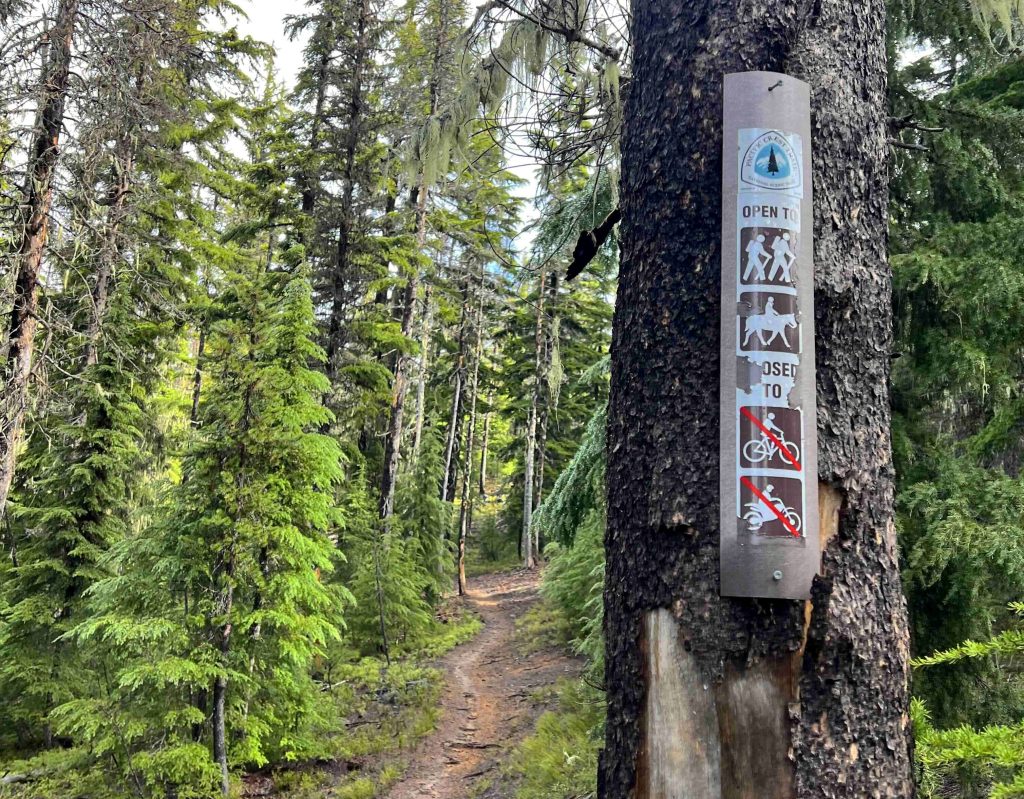
Whether you’re a hiker, hunter, angler, camper, climber, birdwatcher, paddler, scientist, or someone who simply values wild public lands, roadless areas belong to and benefit all of us. The quiet forests, wildlife habitat, and sense of remoteness that make these places special exist because they have remained largely intact.
My recent trip reminded me exactly what is at stake: Once the roads go in, the wild doesn’t come back. Defend the Roadless Rule!